Lit Crawl and Ingeborg Bachmann

Those of you who have been reading my newsletter for a while know that October is Litquake season in San Francisco — Litquake being our annual festival that celebrates writing and literature. Events are happening all across town this week and the next, culminating with a literary pub crawl through the Mission neighborhood on October 24th: Lit Crawl. Please check out the full schedule online, and join me in attending two events with which I’m entangled in various capacities.

First, on October 24, at 5 pm, I will be at the Red Poppy Art House, to listen to the stories from TEA (Transeurasian) Writers Collective. Emceed by the writer comedian in our midst, Yuliya Patsay, the writers will read excerpts from their published and new work, and muse on the ideas of Untranslatable and Unsayable. How do cultural taboos and superstitions contribute to opacity in translation and muddle understanding between cultures? Read our full event description on Lit Crawl’s website, and come hang out and listen to these stories — and as always, let me know if you’re interested in participating in this group.
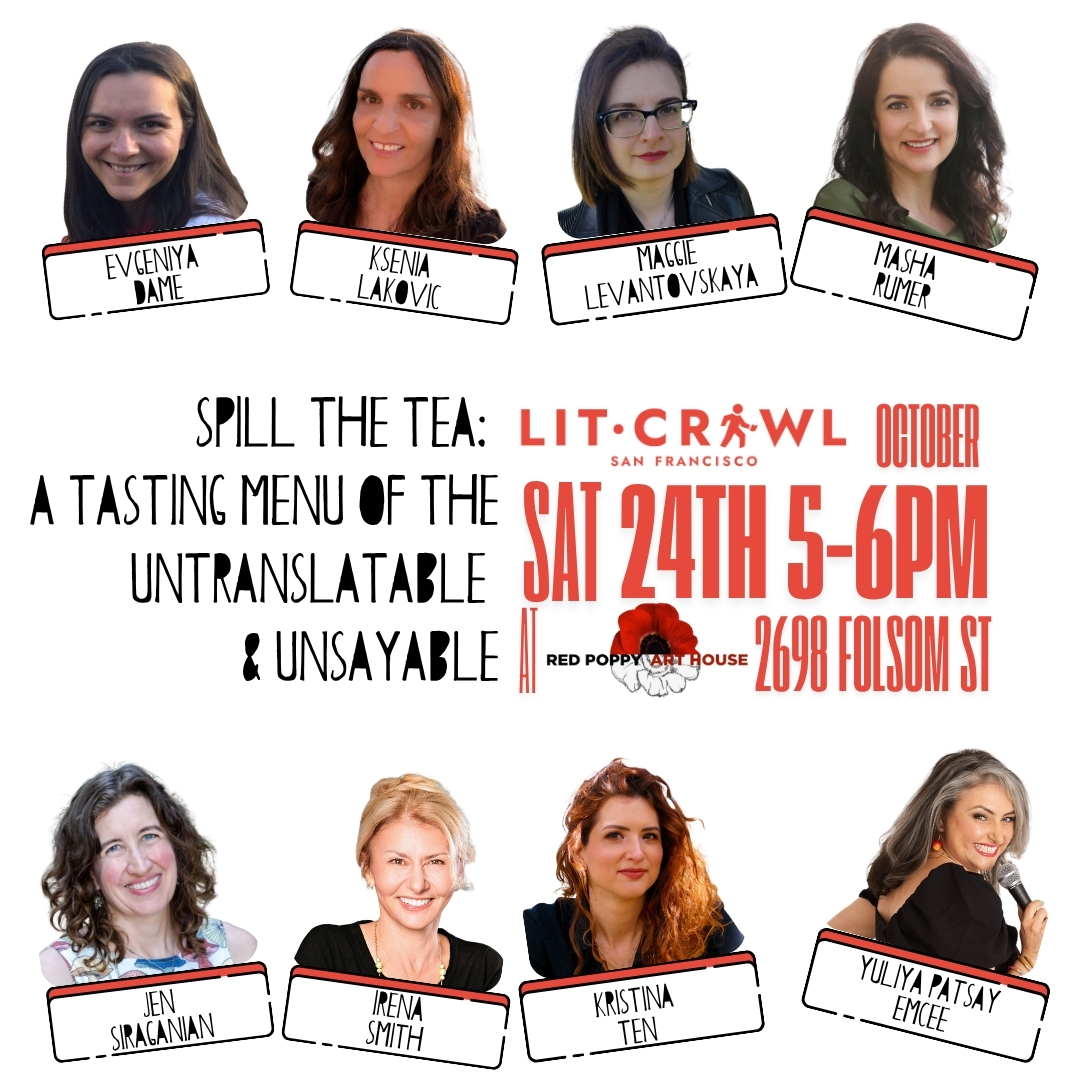
A poster with 8 portraits of female writers

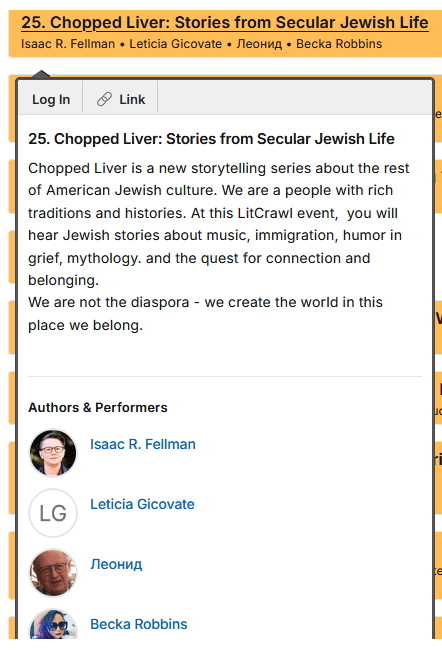
Then, at 6:30 pm, move with me from tea to beer at The Sycamore, for Chopped Liver: Stories from Secular Jewish Life. This event is extra special to me because my dad will be reading from his book Kогда рок был зелёным. He wrote the book in Russian, and I translated the excerpt he’ll be reading at this event. It’s set in 1968 and tells the story of a Soviet student rock band formed around a summer construction brigade. So, the students are building a cow shed by day and play The Beatles and The Animals songs by night. Speaking of the untranslatable. But fun!
In other news this month, my review of Ingeborg Bachmann’s The Collected Prose, translated by Tess Lewis and Philip Boehm, was published in On the Seawall. Bachmann is a post WWII Austrian writer, a poet and a radio personality, who achieved great fame in the German speaking world for calling out lingering Nazi practices in the culture and for connecting Nazism to men’s behavior toward women. She has long been celebrated in the feminist movement, and it’s very rewarding to see this translation bringing her work to wider English-speaking audiences.
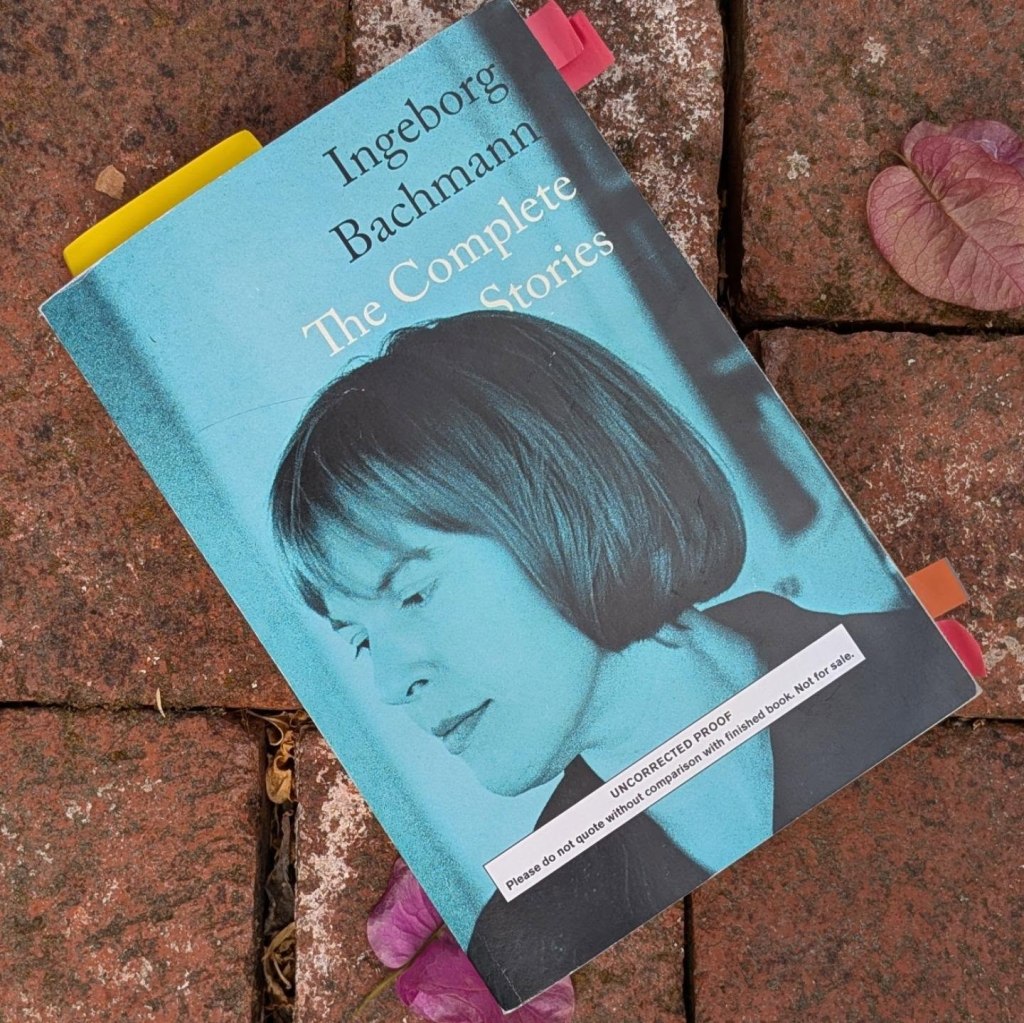
Book cover tinted blue with a woman's face on the cover, against brick background with bougainvillea flowers.

Bachmann’s prose, especially in the early period, tends to the philosophical, and among other things, she does an incredible job of portraying the effects of mental illness on her characters’ lives. I would not recommend reading this book from the beginning — in my review I suggest a particular reading order. Please read the review, buy the book, and enjoy. For me, this has been a very rewarding reading project.
Spring Opportunities

Literary life in the Bay Area is booming, friends. No doubt in response to the increasing violence the world, people are writing, and they are coming together to share their work.

My friend, writer and librarian Monica Nolan is starting a writing group at Excelsior Branch Library. The first meetup is next Wednesday, March 25. And over in Oakland, my friend, writer Tahirah Dean is collaborating to start a generative Writer’s Circle at Nomadic Bookshop. Their first meeting is on Saturday, March 28. Both groups are free of charge and open to all interested writers.

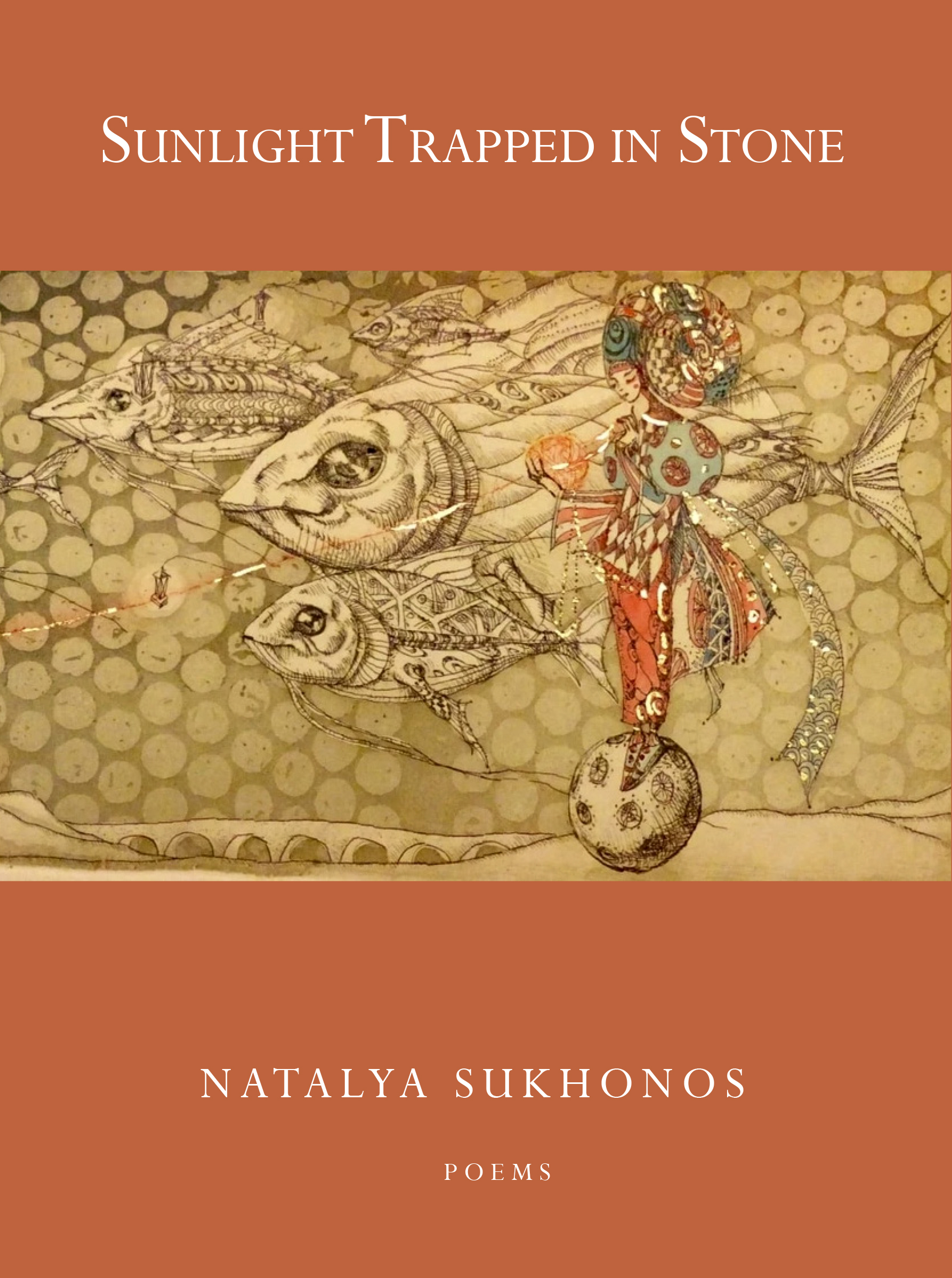
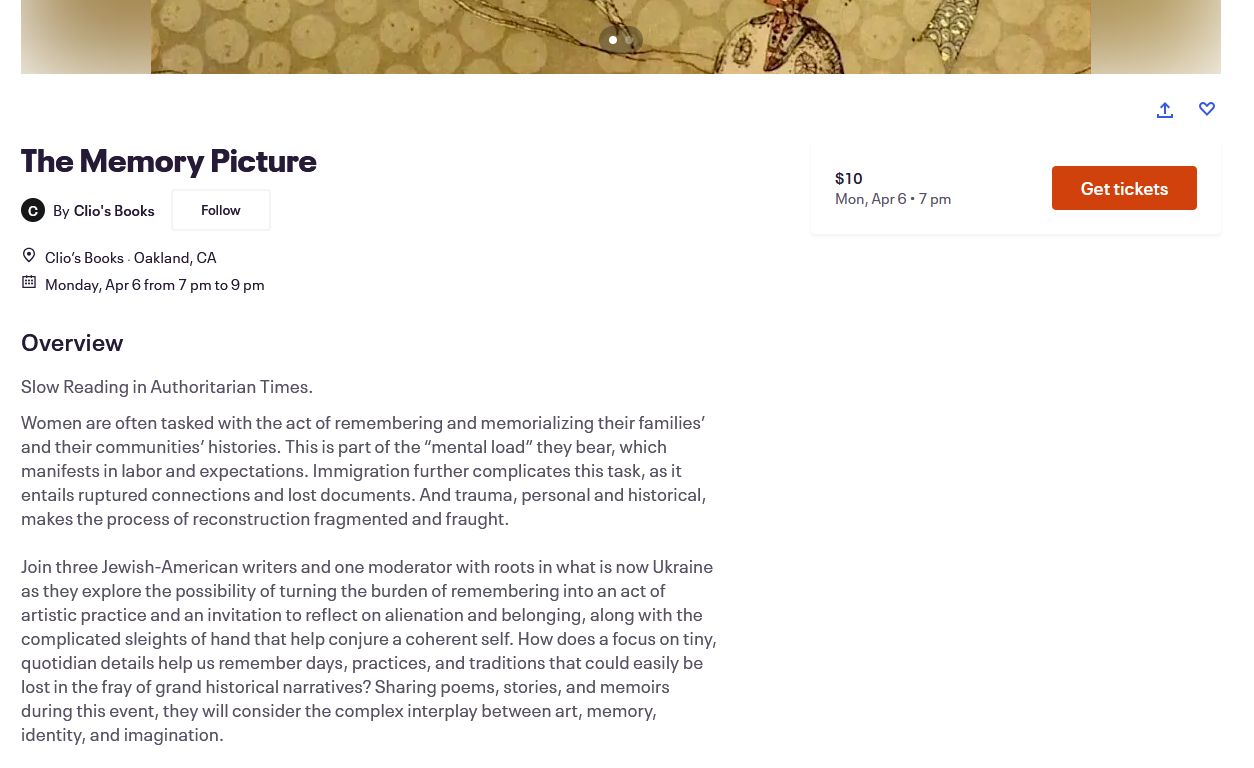
On Monday, April 6, I will be heading over to Clio’s to moderate a panel of three Jewish-American writers with roots in what is now Ukraine. Poet Natalya Sukhonos will be introducing her third book of poems, Sunlight Trapped in Stone, in which she explores her background as an immigrant from Ukraine and recent work helping Ukrainian refugees as well as received historical memory of Holodomor famine and WWII stories of survival. Miryam (Bela) Sas will be introducing her memoir Milk in an Eggshell, forthcoming this fall, that traces her family’s roots to the town of Zbaraż (now in Ukraine, formerly Poland) and connects her family’s story of survival to their struggles after immigration to the United States. The title of our panel, The Memory Picture, comes from the work of Maggie Levantovskaya, whose work in progress Foreign Body: A Memoir of Lupus, Academia and Belonging is about negotiating chronic illness while attempting to become a scholar and process long-held feelings of alienation as a Jewish-Ukrainian immigrant.

The writers on this panel each have three, very different ways of connecting to contemporary Ukraine, as well as three very different artistic sensibilities. I will be asking them questions about the nuanced ways they work with memory, resisting easy answers and comparisons with the past, while pushing us to consider new perspectives. How can we resist the weaponization of traumatic stories for authoritarian aims?

I promise a rich conversation. For more details and to register, please go to this Eventbrite page.

And if you haven’t yet made it to Clio’s, a unique Oakland bookstore and bar, come just to check it out. The books are organized in chronological order!! Really, think about it! The bar serves delicious drinks and tinned fish for snacks. It’s so hip! The place opened a couple of years ago and has been thriving. If you’re lucky, you’ll meet poet Josh Peralta there. He helps to run events among many other things. Buy his book and please buy all the books to support all the writers.

And if you feel inspired and want to improve your craft, consider taking one of the fiction classes my friend Evgeniya Dame is offering this Spring. Your choices are: ELEVATE YOUR CRAFT: FICTION WORKSHOP [in person on Stanford Campus], THE ARC OF THE STORY [in person at Left Margin Lit, Berkeley], or SPRING CLEAN YOUR STORY: A STEP BY STEP REVISION GUIDE [online through Maine Writers and Publishers Alliance].