Stories on Stage

I’m delighted to announce that on Sunday, February 8, 2026 my work will be featured in a reading in Davis, CA called Stories on Stage. A professional actor Eileen Hoang will perform my story “Doctor Sveta” from LIKE WATER AND OTHER STORIES.
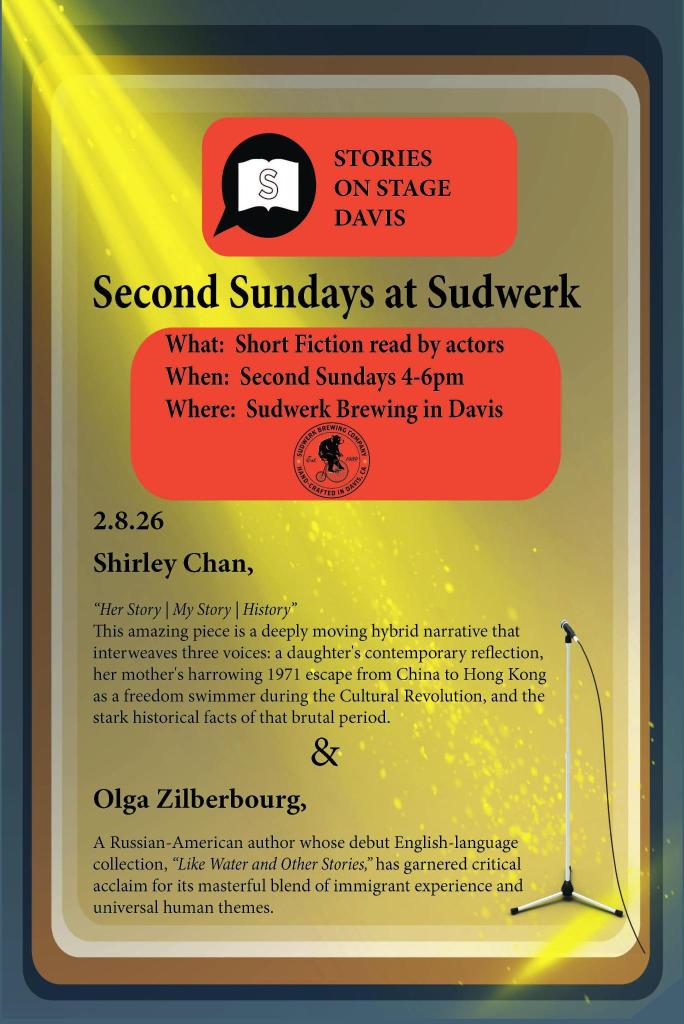
The event starts at 4 pm at Sudwerk Brewing Company in Davis, CA. I can’t wait to see how Eileen might interpret my story “Doctor Sveta,” a historical fiction set during the Cuban Missile Crisis. Huge thanks to organizer, author Jeri Howitt, for putting this together, to the whole team behind the event, and to writer Karolina Letunova for recommending my book.

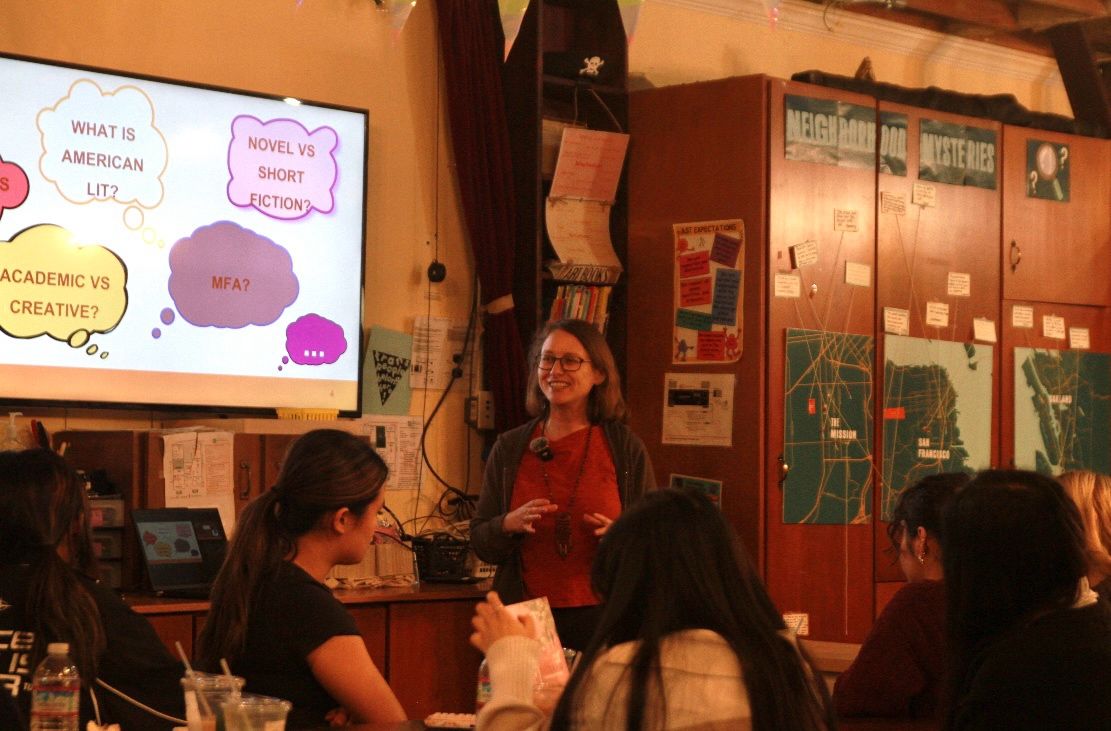
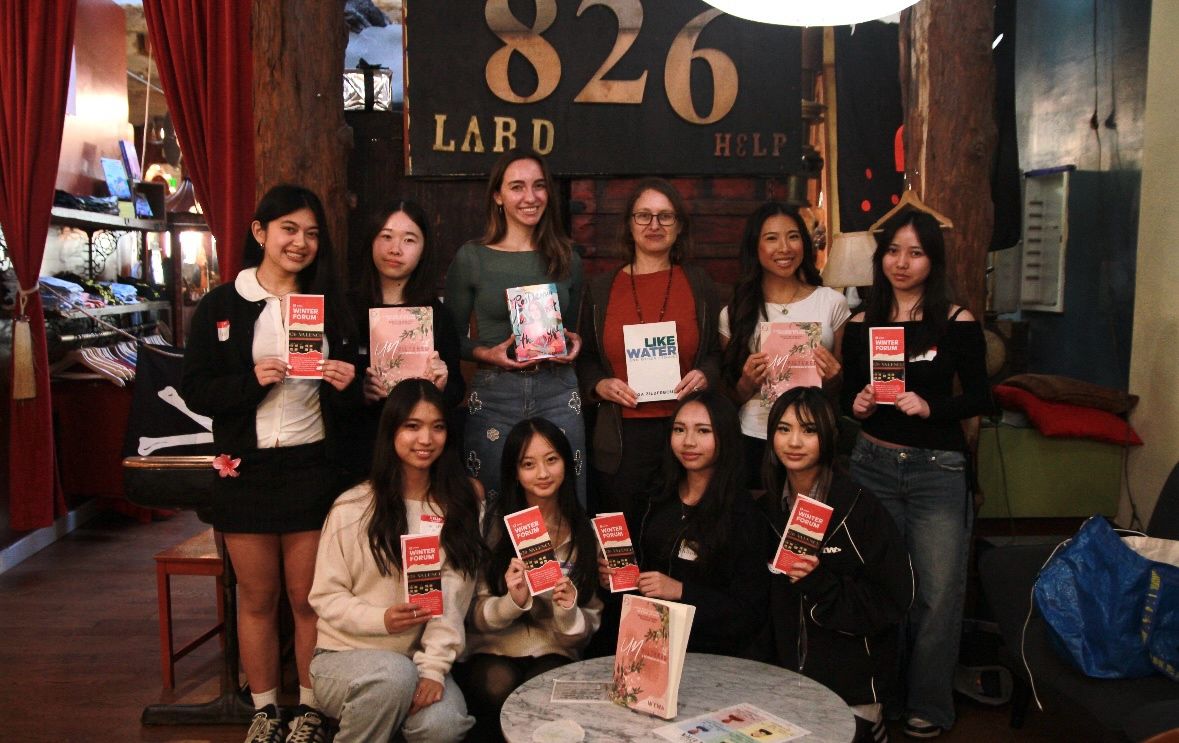
This weekend, I spent an afternoon with a group of about thirty high school students who identify as writers. They banded together to organize Women’s Youth Writing Association (WYWA) with chapters in four local high schools and invited me and Leyla Brittan to give a talk about our writing and writing careers. The participants asked savvy questions about building characters, addressing hyphenated identities on the page, overcoming blocks, finding submissions opportunities, and experimenting with genres. In the face of ever-increasing violence and political instability in the country and in the world, I found this event particularly nourishing. These youths are so talented and motivated!
I have three more links for you today.

  • I reviewed a collection Stories from the Edge of the Sea by a Vietnamese-American writer Andrew Lam for The Common. I’m a big fan of Andrew’s work, and I argue in the essay that he really expands and complicates our ideas of what a short story can be. Also, soup.

  • I reviewed a novel The Disappearing Act by a Russian author in exile, Maria Stepanova, translated by her long-term collaborator, poet Sasha Dugdale for On the Seawall. Writing this piece, I made up a pseudo-psychological term “the beast anxiety” to describe the state of mind of Stepanova’s protagonist. Then, I immediately diagnosed myself with the symptoms.

  • On Punctured Lines this month, read an excerpt from Nadezhda in the Dark, a novel written in verse by Ukrainian-French-American writer Yelena Moskovich. My tagline for this book: The Iliad for post-Soviet Jewish dykes. It’s wild.

To Lit Crawl and Beyond!

Dear friends,

As many of you know, October is Litquake month in San Francisco — our annual literary festival is already underway, with many entertaining, educational, and inspiring events. On October 25 (Saturday), the festival ends with Lit Crawl — a literary pub crawl through the Mission neighborhood.

I’m participating in two events. In Phase 1, from 5-6 pm, find me at Ruth’s Table (3160 21st St), with my fellow immigrant writers from the former USSR. This year, our theme is “Owning Fear, Reaching for Freedom.” We’re reflecting on how our community experience of living under a totalitarian regime has prepared us for the current political moment. And though the theme is as grim as the times, I promise you that the event won’t be. Events with this group of writers and translators are a wonderful occasion to celebrate community and each other’s work. We’re here to support and encourage each other to tell more stories. Too much has been silenced and swept under the rug. We’re trying to bring it all out in the open. It’s a joyous occasion!

A flyer displaying ten author's photos alongside  three quarters perimeter. In the center left, in black, title of the event:
OWNING FEAR, REACHING FOR FREEDOM: POST-SOVIET WRITERS AND TRANSLATORS SPEAK OUT
on the right, in red: LIT CRAWL SAN FRANCISCO
Below, in Blue:
Sat OCTOBER 25TH 5-6 PM
AT RUTH'S TABLE
2160 21st Street
Sponsored by California Humanities and Ruth's Table

Then, for Phase 2, from 6:30 to 7:30 pm, I head to Noisebridge (272 Capp Street), where I will continue to celebrate my writers group. Every Tuesday night, we gather together to read each other our story drafts and to give and receive feedback on our work. This is how we learn to build stronger, more clear and nuanced, stories.

During this event, five of our amazing writers will share their work and tell us about how they’ve revised it after receiving feedback. Then, we’ll ask our audience to critique a story. Guaranteed laughs! (And also maybe it will make revision more approachable to people.)

An image of a blackboard with a stack of yellow pencils in the foreground. Text in yellow and white reads: 
San Francisco Writers Workshop Presents
Five writers read their stories and share the feedback that made them great.
Then YOU get to critique a juicy story, Live!
Below:
Author's portraits with signatures:
Beverly Parayno
Peng Ngin
Tim Sullivan
Jo Beckett-King
Tony Tepper

Below: We've Got Notes for You!
October 25, 2025
Lit Crawl, Phase II, 6:30 pm
Noisebridge, 272 Capp Street

Looking beyond Litquake, on Saturday, November 8, at 6 pm, I will be reading at Telegraph Hill Books alongside my friend Bart Schneider, who has just published his novel GIACOMETTI’S LAST RIDE, about the final romance of a famous Swiss sculptor, Alberto Giacometti. It’s a gorgeously produced book with illustrations by a well-known Sonoma-based artist, Chester Arnold. Bart will introduce the novel, and I will read some of my new work, and then we can talk about books and hang out. Join us!

In other news, my translations from the work of Olga Bragina have received two recent honors.
* Editors of ANMLY nominated the poems they published for a Pushcart Prize.
* One of the poems published by Consequence, has been chosen to appear in Best Literary Translations 2026 anthology, forthcoming from Deep Vellum Press. So delighted! Olga Bragina’s work deserves more recognition.

This summer, Yelena Furman and I have been able to add several publications to Punctured Lines, our feminist blog on post-Soviet and diaspora literature. We pride ourselves in amplifying work by writers from underrepresented groups in our literary space. Dive in:
* We Have to Go Back: Speculative Fiction, Nostalgia, and the Ghosts of Bookshelves Past, Guest Essay by Kristina Ten
* Queering Peripheries: Lara Vapnyar’s “Lydia’s Grove”: Soviet-Born: The Afterlives of Migration in Jewish American Fiction by Karolina Krasuska
* Seven Forty: Memoirs of a Jewish District Attorney from Soviet Ukraine by Mikhail Goldis, translated, edited, and with an Introduction by Marat Grinberg
* Graphic Novels and Memoirs of Soviet Trauma

(Apologies for the TOY STORY reference in my subject line. It’s stuck in my brain and won’t go away.)

With appreciation for you all,

Olga

Spring Events

“My son wants to take the streetcar. My daughter doesn’t. She doesn’t want to walk, either.” A new fiction of mine, “A Train is Coming,” appears in the upcoming issue of Mom Egg (MER) Review 23, copy available for purchase as a PDF and in print. If you want to hear me read it out loud on Zoom, register for the issue release party (free), where I’m delighted to share the stage with my friend, poet Olga Livshin, among others.

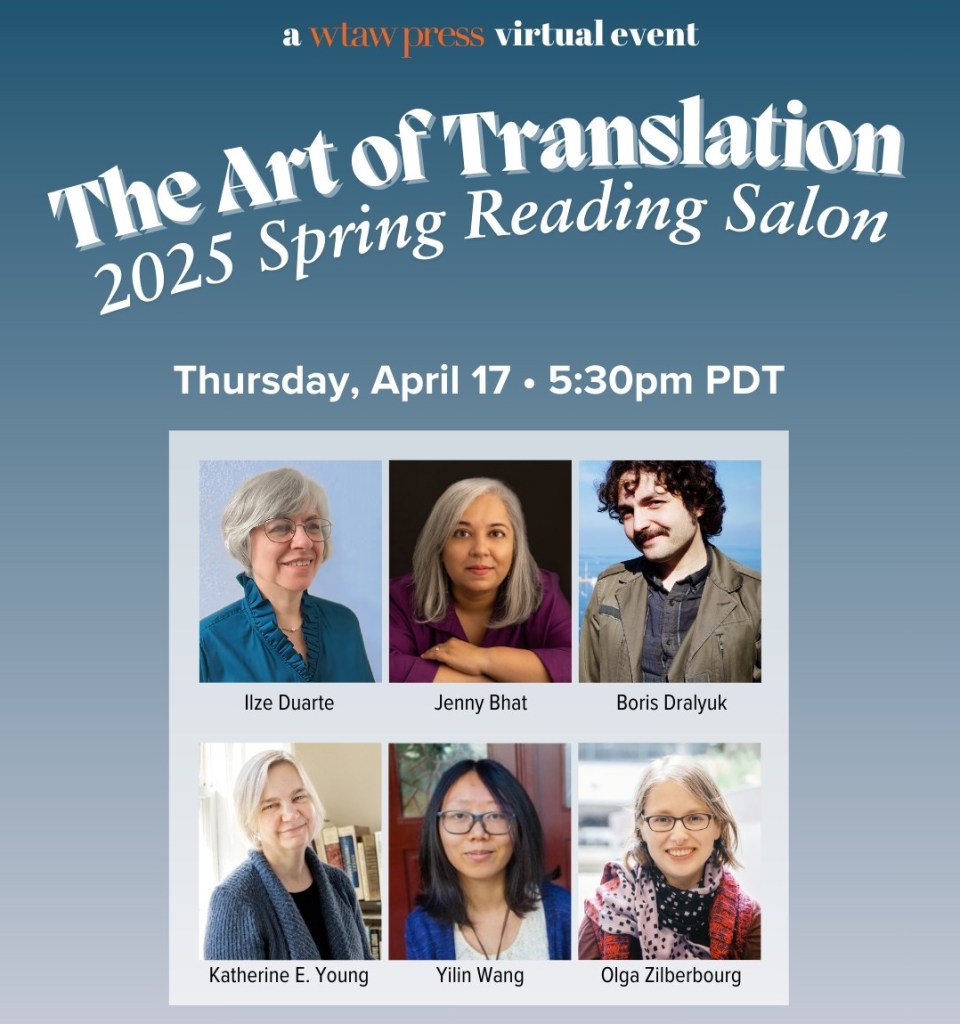
If you can only make it to one Zoom-based Olga Z event this month, I strongly encourage you to come to the translation salon I’ll be MCing on April 17th. Coorganized by translator Ilze Duarte and hosted by WTAW Press (that published my collection), this event will bring to you some of the leading literary translators of the English-speaking world, representing writers from Brazil, India, Ukraine, Azerbaijan, and China. Readers of this newsletter will recognize the names of Boris Dralyuk, who translates Andrey Kurkov, and Katherine E. Young, the translator of Akram Aylisli. It so happens that all of the translators on this reading are also writers and poets themselves, and I only wish I had the time to interview them about how they combine their own writing with their translation projects. One thing for sure, they’re masters of the English letters, opening worlds into other languages and cultures for us. Register (it’s a virtual, Zoom-based event)! This will be fun.

Bay Area locals: I have one more event to invite you to. On May 4, at 1 pm, I’ll be taking a part in a brand new Jewish Arts & Bookfest, being organized at the UC Berkeley’s Magnes collection, “one of the world’s preeminent Jewish museums” (I’m just learning about it too). I’m moderating a panel we called Between War and Peace, on the role of Russian literature in the work of Soviet-born Jewish American writers, featuring Margarita Meklina, Tatyana Sundeyeva, and Sasha Vasilyuk. How did we get from worshipping Pushkin, Akhmatova, and Bulgakov to writing about Soviet Jewish–and often female–experiences? How do the structures and ideas of Russian and Soviet lit continue to affect our own storytelling? How does the popularity of Russian lit in the US intersect with our USSR-formed experiences of it, and what do we do with the image of a “Russian writer” as a bearded white (and ethnically Russian) man? Following my conversation with Marat Grinberg, I have ever more questions. Please join me.

And to continue the theme of Soviet-born writers, I’m leaving you with the recording from the event that took place in Los Angeles in March, a reading by this amazing group of writers born in the USSR, and translators working with the post/Soviet experience. Thank you to Olga Livshin for capturing and editing this video. We called this event Diaspora Writers Against War, and we’re continuing to do what we can to raise funds in support of Ukraine. Please donate to Ukraine TrustChain.

Los Angeles, Zoom, and new publications

I’m delighted to invite you to a one of a kind event happening in Los Angeles on March 28: a reading at the Wende Museum by eighteen writers and translators from the former USSR. We’re coming together to share our work, to get to know each other, and also to eat Ukrainian food (a Ukrainian food truck is expected!) and to support Ukraine.

Register on Eventbrite and if you can’t come, please share this with your friends in LA. Irina Reyn will be there! Katya Apekina! Kristina Gorcheva-Newberry! Our star translators and poets! Did I mention eighteen readers? Each of them, a star.

Expect humor; tales and poems of sex, identity crises, parenting, cultural intersections, immigration, and war. The Wende Museum is dedicated to art and artifacts from the Cold War era, and they are currently running an exhibit called “Undercurrents II: Archives and the Making of Soviet Jewish Identity,” which aligns so closely to what many of us write about. The museum kindly agreed to stay open late for us, until 6 pm, and we’re encouraging people to get there early so that they can tour the exhibit. So: register!

For friends who can’t make it to LA, I have a Zoom event this coming Monday, March 17, 7-8 pm Pacific. Together with writers Jen Siraganian, former Poet Laureate of Los Gatos, and Christin Rice, author of The ABC’s of Pandemic Parenting (Permutation Press), we will be reflecting on the 5th anniversary of the pandemic lockdown. The lockdown has changed our lives in ways that we still feel today. I find it useful to recall the first day, week, month of it, and so I plan to read from my diary–the notes that I managed to capture in the midst of the insanity. To tune in, register here: https://us06web.zoom.us/meeting/register/M-q9F0MfRimjwisnh0uaLQ

I published two new creative pieces in the past month:

  • “Where does your motherland begin? Does it begin with a picture in a primer, with treasured friends who live down the street? With your mother’s song?”

    Radio Baltica, an Essay, about the teenage experience of growing up during my country’s collapse–it’s all about the music of the era and, of course, The Beatles. Thanks to Tint Journal based in Graz, Austria for publishing this piece. I recorded an audio track, so you can hear me reading this essay out loud. Also included is a link to a Spotify playlist where I collected most of the songs I reference. I limited myself to only one Beatles tunes, to be polite, I guess. Alla Pugacheva is here to enchant!
  • “A seven-year-old girl falls in love with a book and tells herself, I want to read every book in the world.”

    New story: “A Woman of Learning,” in Weavers Literary Review. No link here because this mag is print only for now. I have a couple of copies, so let me know if you want one — or feel free to order and support the publishers. The magazine by Moazzam Sheikh and Amna Ali focuses on South Asian American writing, and they have a very strong curatorial vision. I’m honored to have my story included, especially given that my geographies aren’t an immediate match.

I’m taking a break from book reviewing at the moment; that being said, I want to point out two book-related pieces I wrote:

  • To accompany my recent review of Avtodya Panaeva’s The Talnikov Family, I interviewed the translator Fiona Bell as well as Panaeva scholar Margarita Vaysman. To learn more about an incredible 19th century Russian female writer, a woman who helped run a most influential literary magazine, do read this Q&A: Narrating a Violent Childhood on Punctured Lines–here are so many insights!
  • I never miss a chance to gush about a favorite writer. This time, the question “what are you reading now?” from The Common arrived just as I was finishing Bohumil Hrabal’s I Served the King of England.

Feminist reading list

During my interview with Seville artist Anna Jonsson, I asked her about her sources of inspiration. I ended up having to cut this thread in our conversation from the essay that recently went up on Electric Literature–it was a tangent in the scope of that essay–but it’s a fascinating list of artists and writers, and I want to leave it here.

Anna Jonsson wrote,

“Pippi Longstocking, by Astrid Lindgren—of course. All of her books and her illustrators. Tove Jansson and her Moomin stories and her drawings. Gitta Sereny, Oliver Sacks, Salman Rushdie, Bodil Malmsten, Claire Bretecher and her drawings, Linda Nochlin and her photograph ‘Buy My Bananas’ made an impact on me. Lately, I’ve been reading and crying and reading and crying over Svetlana Alexievich’s ‘War’s Unwomanly Face.’”

Jonsson’s list struck me as specific to her background and training. It was also a useful guide to an aspiring feminist art and literary critic. Some authors had achieved international fame; others had been less well translated. Astrid Lingren and Tove Jansson were two names I’d been familiar with since childhood. Oliver Sacks, Salman Rushdie; Svetlana Alexievich had recently won the Nobel prize for literature, and I’d been reading extended excerpts from her books, though still working on my stamina to hold as much pain as is necessary to read them cover to cover.

I looked up Linda Nochlin’s 1972 photograph “Buy My Bananas.” It turned out to be a take on a late 19th Century photograph in which a female nude is depicted with a tray of fruit, in a pose that suggests that both she and the fruit are for sale. Nochlin’s model is a male nude, photographed in the same pose. The effect of this gender reversal is both ridiculous and outrageous.

I was able to track down one other lead from Jonsson’s list. Bodil Malmsten’s memoir about moving from Sweden to France, was published in 2005 by Harvill, in Frank Perry’s translation, as “The Price of Water in Finistère.” A Swedish poet and a novelist with more than dozen books to her name, Malmsten wrote with wisdom and humor about starting life anew, at fifty-five, in an unfamiliar place, with only a cursory knowledge of French. Malmsten plants an elaborate garden that she describes in detail, drawing from these descriptions elegant metaphors about writing. “Like the first fifteen days for a plant, the first fifteen words of a story have to contain everything the story needs to survive.” Finding my way back to creative writing after having a baby, I found in this book just the right kind of inspiration.

On the infinite wisdom of Ursula Le Guin

I’m rereading A Wizard of Earthsea. It’s marvelously wise, and to think that it was one of the earliest of Le Guin’s published novels! I’ve read interviews with Le Guin, where she credits her discovery of feminism with uplifting her career. “A Wizard of Earthsea” predates her feminist work, but there are fun ways of reading it as a proto-feminist narrative, I believe.

Here’s a passage that comes at the end of Ged’s schooling; he’s graduated and became a full-staffed wizard. Now he needs to leave the school, and for that he needs to guess the name of The Master Doorkeeper.

Ged knew a thousand ways and crafts and means for finding out names of things and of men, of course; such craft was a part of everything he had learned at school, for without it there could be little useful magic done. But to find out the name of a Mage and Master was another matter. A mage’s name is better hidden than a herring in the sea, better guarded than a dragon’s den. A prying charm will be met with a stronger charm, subtle devices will fail, devious inquiries will be deviously thwarted, and force will be turned ruinously back upon itself. . . . .


After the sun was up Ged went, still fasting, to the door of the House and knocked. The Doorkeeper opened.

“Master,” said Ged, “I cannot take your name from you, not being strong enough, and I cannot trick your name from you, not being wise enough. So I am content to stay here, and learn or serve, whatever you will: unless by chance you will answer a question I have.”

“Ask it.”

“What is your name?”

Buy and read the rest of the book.