Stories on Stage

I’m delighted to announce that on Sunday, February 8, 2026 my work will be featured in a reading in Davis, CA called Stories on Stage. A professional actor Eileen Hoang will perform my story “Doctor Sveta” from LIKE WATER AND OTHER STORIES.
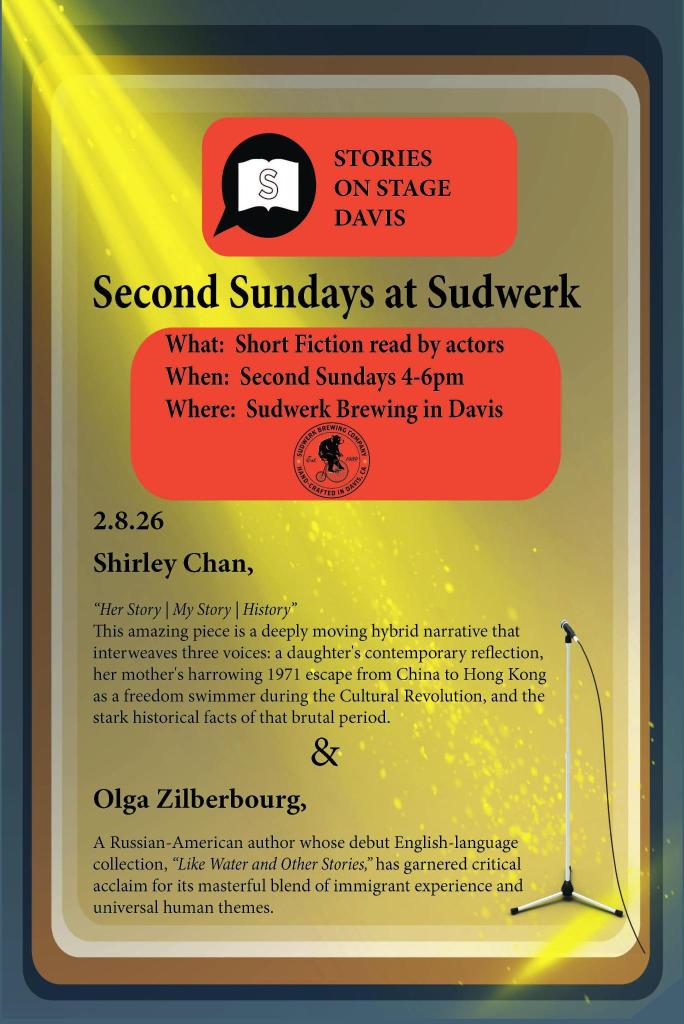
The event starts at 4 pm at Sudwerk Brewing Company in Davis, CA. I can’t wait to see how Eileen might interpret my story “Doctor Sveta,” a historical fiction set during the Cuban Missile Crisis. Huge thanks to organizer, author Jeri Howitt, for putting this together, to the whole team behind the event, and to writer Karolina Letunova for recommending my book.

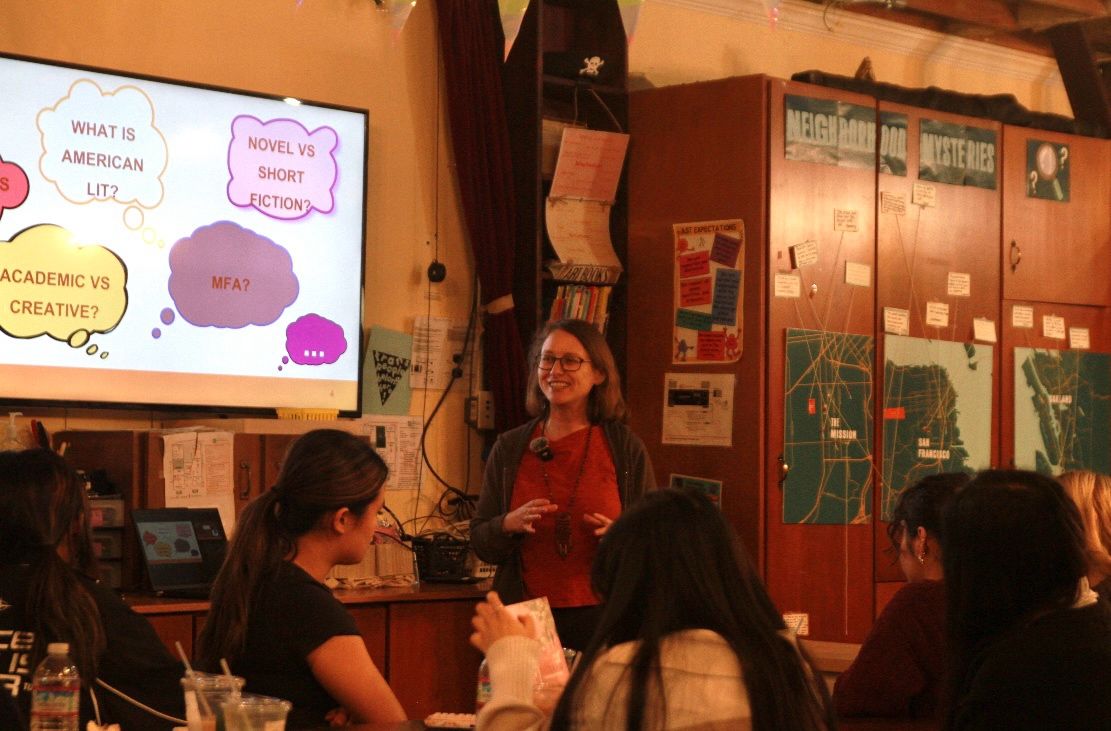
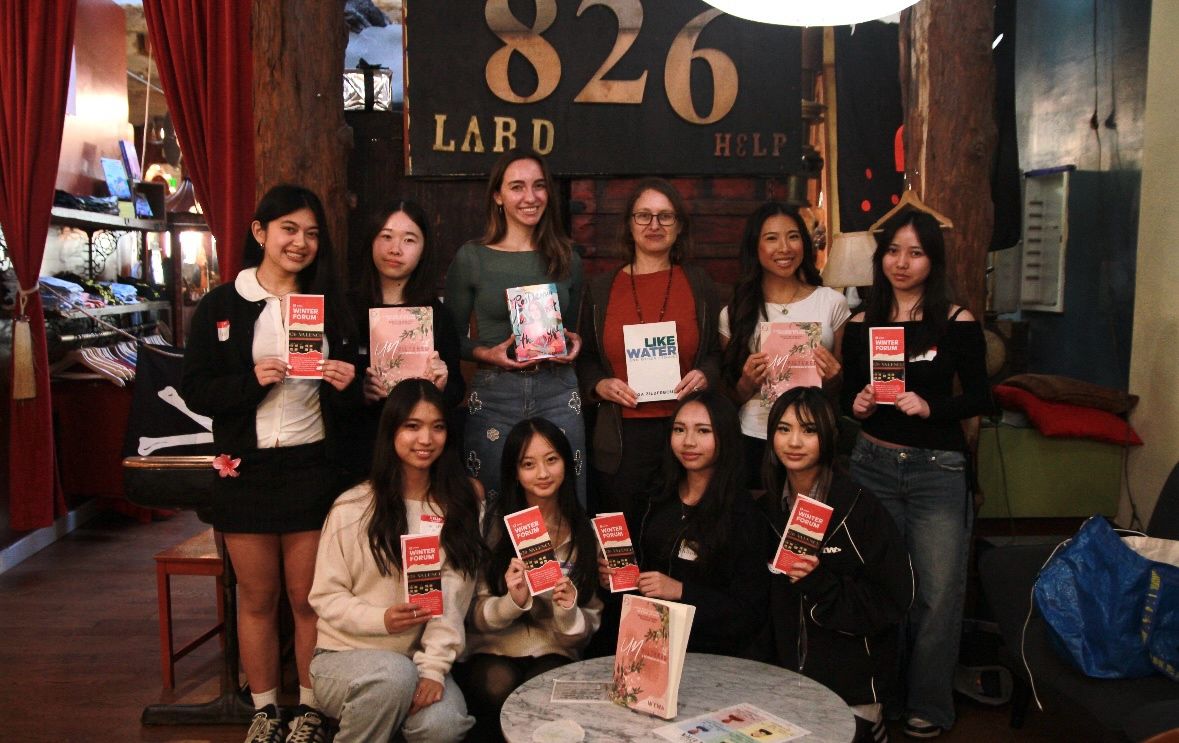
This weekend, I spent an afternoon with a group of about thirty high school students who identify as writers. They banded together to organize Women’s Youth Writing Association (WYWA) with chapters in four local high schools and invited me and Leyla Brittan to give a talk about our writing and writing careers. The participants asked savvy questions about building characters, addressing hyphenated identities on the page, overcoming blocks, finding submissions opportunities, and experimenting with genres. In the face of ever-increasing violence and political instability in the country and in the world, I found this event particularly nourishing. These youths are so talented and motivated!
I have three more links for you today.

  • I reviewed a collection Stories from the Edge of the Sea by a Vietnamese-American writer Andrew Lam for The Common. I’m a big fan of Andrew’s work, and I argue in the essay that he really expands and complicates our ideas of what a short story can be. Also, soup.

  • I reviewed a novel The Disappearing Act by a Russian author in exile, Maria Stepanova, translated by her long-term collaborator, poet Sasha Dugdale for On the Seawall. Writing this piece, I made up a pseudo-psychological term “the beast anxiety” to describe the state of mind of Stepanova’s protagonist. Then, I immediately diagnosed myself with the symptoms.

  • On Punctured Lines this month, read an excerpt from Nadezhda in the Dark, a novel written in verse by Ukrainian-French-American writer Yelena Moskovich. My tagline for this book: The Iliad for post-Soviet Jewish dykes. It’s wild.

Los Angeles, Zoom, and new publications

I’m delighted to invite you to a one of a kind event happening in Los Angeles on March 28: a reading at the Wende Museum by eighteen writers and translators from the former USSR. We’re coming together to share our work, to get to know each other, and also to eat Ukrainian food (a Ukrainian food truck is expected!) and to support Ukraine.

Register on Eventbrite and if you can’t come, please share this with your friends in LA. Irina Reyn will be there! Katya Apekina! Kristina Gorcheva-Newberry! Our star translators and poets! Did I mention eighteen readers? Each of them, a star.

Expect humor; tales and poems of sex, identity crises, parenting, cultural intersections, immigration, and war. The Wende Museum is dedicated to art and artifacts from the Cold War era, and they are currently running an exhibit called “Undercurrents II: Archives and the Making of Soviet Jewish Identity,” which aligns so closely to what many of us write about. The museum kindly agreed to stay open late for us, until 6 pm, and we’re encouraging people to get there early so that they can tour the exhibit. So: register!

For friends who can’t make it to LA, I have a Zoom event this coming Monday, March 17, 7-8 pm Pacific. Together with writers Jen Siraganian, former Poet Laureate of Los Gatos, and Christin Rice, author of The ABC’s of Pandemic Parenting (Permutation Press), we will be reflecting on the 5th anniversary of the pandemic lockdown. The lockdown has changed our lives in ways that we still feel today. I find it useful to recall the first day, week, month of it, and so I plan to read from my diary–the notes that I managed to capture in the midst of the insanity. To tune in, register here: https://us06web.zoom.us/meeting/register/M-q9F0MfRimjwisnh0uaLQ

I published two new creative pieces in the past month:

  • “Where does your motherland begin? Does it begin with a picture in a primer, with treasured friends who live down the street? With your mother’s song?”

    Radio Baltica, an Essay, about the teenage experience of growing up during my country’s collapse–it’s all about the music of the era and, of course, The Beatles. Thanks to Tint Journal based in Graz, Austria for publishing this piece. I recorded an audio track, so you can hear me reading this essay out loud. Also included is a link to a Spotify playlist where I collected most of the songs I reference. I limited myself to only one Beatles tunes, to be polite, I guess. Alla Pugacheva is here to enchant!
  • “A seven-year-old girl falls in love with a book and tells herself, I want to read every book in the world.”

    New story: “A Woman of Learning,” in Weavers Literary Review. No link here because this mag is print only for now. I have a couple of copies, so let me know if you want one — or feel free to order and support the publishers. The magazine by Moazzam Sheikh and Amna Ali focuses on South Asian American writing, and they have a very strong curatorial vision. I’m honored to have my story included, especially given that my geographies aren’t an immediate match.

I’m taking a break from book reviewing at the moment; that being said, I want to point out two book-related pieces I wrote:

  • To accompany my recent review of Avtodya Panaeva’s The Talnikov Family, I interviewed the translator Fiona Bell as well as Panaeva scholar Margarita Vaysman. To learn more about an incredible 19th century Russian female writer, a woman who helped run a most influential literary magazine, do read this Q&A: Narrating a Violent Childhood on Punctured Lines–here are so many insights!
  • I never miss a chance to gush about a favorite writer. This time, the question “what are you reading now?” from The Common arrived just as I was finishing Bohumil Hrabal’s I Served the King of England.

January Event and Recent News

I’ve got a Zoom event coming up that I’ve been working toward for over a year. On January 22, at 5 pm Pacific, I will be in conversation with Marat Grinberg about his book, The Soviet Jewish Bookshelf (brilliantly reviewed in LARB by Yelena Furman), which gave me language to describe my own sense of identity. This event is hosted by the Oregon Jewish Museum, tickets cost $5, and if you register and can’t make it, they’ll send you a recording! And I hope you can make it. The magic of Zoom!

The last few months have been busy for me, and I have a few things to report.

Back in November, a new short story of mine appeared in the Teatles, a fanzine out of Liverpool, England (!). If you’re on Instagram, their feed is all about the Beatles and tea! Yes, I’m excited. Did I mention that my story is being read in Liverpool??

Для моих русскоязычных читателей: смотрите “Ходики”, видео Алексея Зинатулина и АРТотеки Берёзовый сказ по рассказу Ольги Гренец из сборника Задержи дыхание. // Aleksey Zinatulin from Tver created a short film based on my story “The Clock.” First published in English at Tin House, online edition, this story is included in my collection LIKE WATER AND OTHER STORIES (WTAW Press).

My story The Question, published earlier in 2024, received the Editors’ Choice Award from the magazine Scoundrel Time, as well as a Pushcart Prize nomination. Huge thanks to the editors Karen E. Bender and Paula Whyman!

I published four (4!) book reviews in the past two months, some of which took over a year to draft and place. It’s a lot of fun and a lot of work, and I’d be overjoyed if anyone wanted to continue the conversation with me about any of these books:

Lastly, an update about the drama around my kids’ San Francisco public elementary school. The good news is that we were able to push back against the district, and get it to rescind all the school closures. At least for next year. Here’s the Op-Ed I wrote for the Bay Area Reporter about my kids’ experience with our school.

Review: Three Apples Fell From the Sky

Thanks to The Common, a magazine dedicated to literature of place, and editor Nina Sudhakar for working with me and publishing my review of Narine Abgaryan’s novel in Lisa C. Hayden’s translation. I highly recommend this book, and if anyone interested, I know of a Twitter read-together group that’s planning to dig into this novel in March 2021.

A brave writer begins her novel with the deathbed. Instead of hooking a reader the way the proverbial gun on the wall might, opening with a death scene threatens her with the inevitable backstory.

Luckily, Narine Abgaryan is both a brave and an experienced writer. Three Apples Fell from the Sky is her fifth full-length novel, which won Russia’s prestigious Yasnaya Polyana Literary Award in 2016. Maine-based Lisa C. Hayden translated this novel for Oneworld, and after a COVID19-based delay, the book was released in the UK in August 2020. The novel opens with Anatolia Sevoyants, the protagonist, as she lies down “to breathe her last.” Soon, though, we learn that while Anatolia fully intends to die, life is far from finished with her.

https://www.thecommononline.org/three-apples-fell-from-the-sky/

My review of Margarita Khemlin’s Klotsvog, in Lisa C. Hayden’s translation

I’m delighted to see my review of Margarita Khemlin’s powerful novel Klotsvog in Lisa C. Hayden’s translation up on The Common. Huge thanks to Nina Sudhakar for editing.

The piece is available online for free, and I urge you to spread the word, subscribe, and donate to this wonderful publication that focuses on writing of place. And they pay their writers, too!

“The year is 1950 in Kiev. A twenty-year-old college student, Maya Klotsvog, falls in love with her professor, Viktor Pavlovich. He’s eight years older and married. One day, the professor’s wife, Darina Dmitrievna, catches up with Maya at the tram stop and reveals that her husband loves Maya and has asked for a divorce. He wants to marry Maya and have children with her. But Darina Dmitrievna adds something else: “You’re Jewish and your children would be half Jewish. And you yourself know what the situation is now. You read the papers, listen to the radio. And then that shadow would fall on Viktor Pavlovich himself, too. Anything can happen. Don’t you agree? Babi Yar over there is full of half-bloods.”

https://www.thecommononline.org/review-klotsvog-by-margarita-khemlin/

Changing the rules of reality to get at the raw truth of an emotionally complicated experience

I’m deeply grateful to Jen Hinst-White of The Common for this thoughtful review of LIKE WATER AND OTHER STORIES:

The story drops an idea on the table and leaves the reader with something to puzzle out. It’s an example of Zilberbourg’s skill with brevity; even the longer pieces in this collection are just ten or twelve pages, stories to eat quickly and digest slowly. Some, like “Email” and “One’s Share,” are no longer than a paragraph. (This feels appropriate, given all the childrearing themes here. For parents of small children, sometimes an entire meal consists of small, stolen bites, chewed while doing something else. The same can be true for our reading and writing lives.)

The stories in this collection are so interrelated that questions provoked by one story are sometimes given context by another.

https://www.thecommononline.org/review-like-water-by-olga-zilberbourg/

My book is available from WTAW Press.

Gunnhild Øyehaug’s Knots, Review

I recommend Gunnhild Øyehaug’s short story collection Knots, out from FSG this summer.

It felt foreordained to open this short story collection by the Norwegian writer Gunnhild Øyehaug and find IKEA on the first page, as in: “…park the car outside IKEA.” IKEA, now based in the Netherlands, originated in Sweden, but to many foreigners, it personifies Scandinavia—pleasant and unthreatening. “Blah, how boring,” was my first thought. Then, trying to stave off disappointment at being welcomed by the all-too-familiar global brand, I told myself, “Well, I guess IKEA did start somewhere nearby. Perhaps, Scandinavians have a particular attachment to clean lines.” (Nervous laughter.) I know that stereotyping is a form of blindness; in practice, my desire for novelty trips me up and leads to overly broad generalizations. Like a tourist, I had to remind myself to check my expectations at the airport.

Gunnhild Øyehaug’s Norway begins, indeed, with the comfortably familiar. . . .

Read the rest of my review on The Common.