Karolina Ramqvist’s The White City

I heard this author read during Litquake and bought the book. Part heist novel, part a novel about becoming a mother, it blends the genres so effortlessly that, having finished the book, I’m convinced that motherhood is a kind of a heist. Translated from Swedish by Saskia Vogel. A beautiful edition by the Black Cat imprint of Grove Atlantic.

The baby’s named Dream. (What a cool name!)

 She put one arm over the baby, who had gone back to nursing, and rested her head on the other, trying to unwind and sink into the sofa. She focused on her body, one part at a time; she noticed her teeth clenching and opened her mouth all the way. Opening and shutting it and working her jaw from side to side to relieve the tension.  …

Dream downed the milk, swallowing while nuzzled into her white breast. Round as the baby’s cheeks and head, round as the areola that peeked out because Dream hadn’t gotten a proper grip on her nipple again. Round and round, rounds and rounds. The milk dribbled out of the baby’s mouth and ran down her breast, leaving a sticky trail on her skin and a wet stain on her robe.

Does the body keep producing breast milk after death? If something were to happen to her, if she choked or a blood vessel burst in her brain or if someone were to break in and take her out for good, it would probably be a while before anyone would miss her. But if she had enough milk in her breasts, then Dream might have a chance of surviving until someone showed up.

She tried to concentrate on the softness.
 

Рецензия на “Хлоп-страну” в журнале “Знамя”

Если Бедная Девушка Беломлинской все еще живет Россией, то Травка Ольги Гренец уже давно от нее отпочковалась, и то, что происходит на родине, ее интересует все меньше и меньше. В первой части книги, где автор еще дает какую-то связь между новой и старой родиной, изредка встречаются рассказы, в которых сквозит «среднерусская тоска». Например, в рассказе «Сливки и сахар», исподволь, между строк, дана картина гремящей где-то войны, совершенно не стыкующейся с описанием мелких мещанских привычек посетителей аэропорта. Это, пожалуй, один из самых удачных рассказов Ольги, построенных на эллипсисе, на недосказанности.  …

читать целиком рецензию Ольги Аникиной. “Счастьеведение”,  журнал “Знамя” 2017, №9.


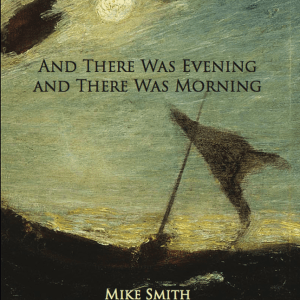
Mike Smith’s And There Was Evening, and There Was Morning

Last year, when I participated, in a small way, with the launch of WTAW Press, I got a chance to read the manuscripts in draft form. This month, holding the two published books in my hand was a strange experience: an excitement coupled with worry, How will they hold up? Will the binding solidify the beauty I had glimpsed in the original writing? Will it bring forward the flaws?

Mike Smith’s book, And There Was Evening, and There Was Morning is a memoir of originalterrible loss: the author’s first wife dies of cancer shortly after the birth of their second child. The book is a collection of essays, structured in such a way that in each piece, in each chapter, we return to this tragedy, over and over again. Fifteen times over we are with Mike and the kids, Virgina and Langston, losing Emily. Other sad, scary, happy, and funny things happen in the book. Mike meets his second wife, they marry and move together to a new town in a new state. His stepdaughter, coincidentally also named Emily, goes through a bout with cancer. But oh boy oh boy. Turn the page, and there’s his beloved Emily, dying again.

Difficult reading? No, not at all. It’s a love story. The book reads like a love poem, on a single gulp of breath. Mike’s tendency to introspection, his openness to Emily and her world and the desire to continue his engagement with her interests and concerns, his ability to converse with her work after her death, is so endearing that from the very first sentences I want to know Mike, I want to spend time with him, I find in myself the resources to stay with him through his grief and to go there, into the hospital room, to be with Emily, in her final months, weeks, and days, over and over again. Emily Arndt was a scholar and I find it a solace that a book that she wrote, a revised version of her dissertation, has been published and can be found out there.

I’ll quote the first sentences from Mike Smith’s memoir, to give a sense of its rhythm and what I mean about it being a love story:

My first wife Emily and I were married for ten years. We met when she walked into the small bookstore where I worked and applied for a job. The manager must have hired her that very afternoon because we shared the following Saturday evening and Sunday morning turnaround shifts. It was fitting that we grew to know one another surrounded by books.

Thank you Peg Alford Pursell and WTAW Press for publishing this. Thank you, Mike, for sharing this story. Thank you also for all of your wonderful insight into story and character and the willingness to push and push on a thread of thought.

Gunnhild Øyehaug’s Knots, Review

I recommend Gunnhild Øyehaug’s short story collection Knots, out from FSG this summer.

It felt foreordained to open this short story collection by the Norwegian writer Gunnhild Øyehaug and find IKEA on the first page, as in: “…park the car outside IKEA.” IKEA, now based in the Netherlands, originated in Sweden, but to many foreigners, it personifies Scandinavia—pleasant and unthreatening. “Blah, how boring,” was my first thought. Then, trying to stave off disappointment at being welcomed by the all-too-familiar global brand, I told myself, “Well, I guess IKEA did start somewhere nearby. Perhaps, Scandinavians have a particular attachment to clean lines.” (Nervous laughter.) I know that stereotyping is a form of blindness; in practice, my desire for novelty trips me up and leads to overly broad generalizations. Like a tourist, I had to remind myself to check my expectations at the airport.

Gunnhild Øyehaug’s Norway begins, indeed, with the comfortably familiar. . . .

Read the rest of my review on The Common.

Strange Weather in Tokyo

From Hiromi Kawakami’s Strange Weather in Tokyo, translated from the Japanese by Allison Markin Powell,

He was my Japanese teacher at secondary school. He wasn’t my form teacher, and Japanese didn’t interest me much, so I didn’t really remember him. Since I finished school, I hadn’t seen him for quite a while.

Several years ago, we sat beside each other at a crowded bar near the train station, and after that, our paths would cross every now and then. that night, he was sitting at the counter, his back so straight it was almost concave.

Taking my seat at the counter, I ordered “Tuna with fermented soybeans, fried lotus root, and salted shallots,” while the old man next to me requested “Salted shallots, lotus root fries, and tuna with fermented soybeans” almost simultaneously. when I glanced over, I saw he was staring straight back at me.

This delightful book can be found through the publisher’s website.

On the infinite wisdom of Ursula Le Guin

I’m rereading A Wizard of Earthsea. It’s marvelously wise, and to think that it was one of the earliest of Le Guin’s published novels! I’ve read interviews with Le Guin, where she credits her discovery of feminism with uplifting her career. “A Wizard of Earthsea” predates her feminist work, but there are fun ways of reading it as a proto-feminist narrative, I believe.

Here’s a passage that comes at the end of Ged’s schooling; he’s graduated and became a full-staffed wizard. Now he needs to leave the school, and for that he needs to guess the name of The Master Doorkeeper.

Ged knew a thousand ways and crafts and means for finding out names of things and of men, of course; such craft was a part of everything he had learned at school, for without it there could be little useful magic done. But to find out the name of a Mage and Master was another matter. A mage’s name is better hidden than a herring in the sea, better guarded than a dragon’s den. A prying charm will be met with a stronger charm, subtle devices will fail, devious inquiries will be deviously thwarted, and force will be turned ruinously back upon itself. . . . .


After the sun was up Ged went, still fasting, to the door of the House and knocked. The Doorkeeper opened.

“Master,” said Ged, “I cannot take your name from you, not being strong enough, and I cannot trick your name from you, not being wise enough. So I am content to stay here, and learn or serve, whatever you will: unless by chance you will answer a question I have.”

“Ask it.”

“What is your name?”

Buy and read the rest of the book.

Show Her a Flower, a Bird, a Shadow

Peg Alford Pursell is one of the writers whose work I’ve been following for some years, having met her when she moved to the Bay Area and became a regular, for a time, at the San Francisco Writers Workshop. It’s a particular pleasure to hold in my hands a book that I feel I already know intimately, from having seen some of the stories in drafts, from knowing the author’s aesthetic and using that as a jumping off point into the reading. my-book-cover-in-this-size-2_2_0

But what if the book proves to be too familiar, too well-known, its movements too predictable? Will the writer still surprise, like a partner after many years of marriage? The risk is high, and the reward — oh the reward. Being allowed into the inner world of another human being, being encouraged to examine the corridors of her heart, laid out in all of their complexity, the dizzying sensation of falling into the words as into a looking glass.

Show Her a Flower, a Bird, a Shadow delivers all that. I’m about halfway through. Looking at its cover, I thought of describing it as baroque for a kind of exuberance in the detail of the bird and the petals. Such a perfect cover to this book, where the sparseness of language coexists with sudden proliferation, of streamlined sentences opening unexpectedly into luxurious, and soaring, flourishes.

The Catography of Others

Catherine McNamara is a uniquely gifted writer, able to translate her amazing travel and life experiences into thought-provoking fiction. I’ve read some of Catherine’s work, and I’m delighted to welcome her upcoming book, The Cartography of Others. It’s being crowdfunded by a UK-based press, Unbound. This promises to be a super cool campaign with some awesome pledges — how about an opera date in Verona?

The Cartography of Others is a collection of twenty stories that take place from fumy Accra to the Italian Dolomites, from suburban Sydney to high-rise Hong Kong. Lives are mapped, unpicked, crafted, overturned. Each story inhabits a location that becomes as vital as the characters themselves, men and women who are often far from home, immersed in unfamiliar cultures, estranged from those they hold dear. Love is panicked, worn, tested.

There’s a cool book video, too.

https://unbound.com/books/the-cartography-of-others